
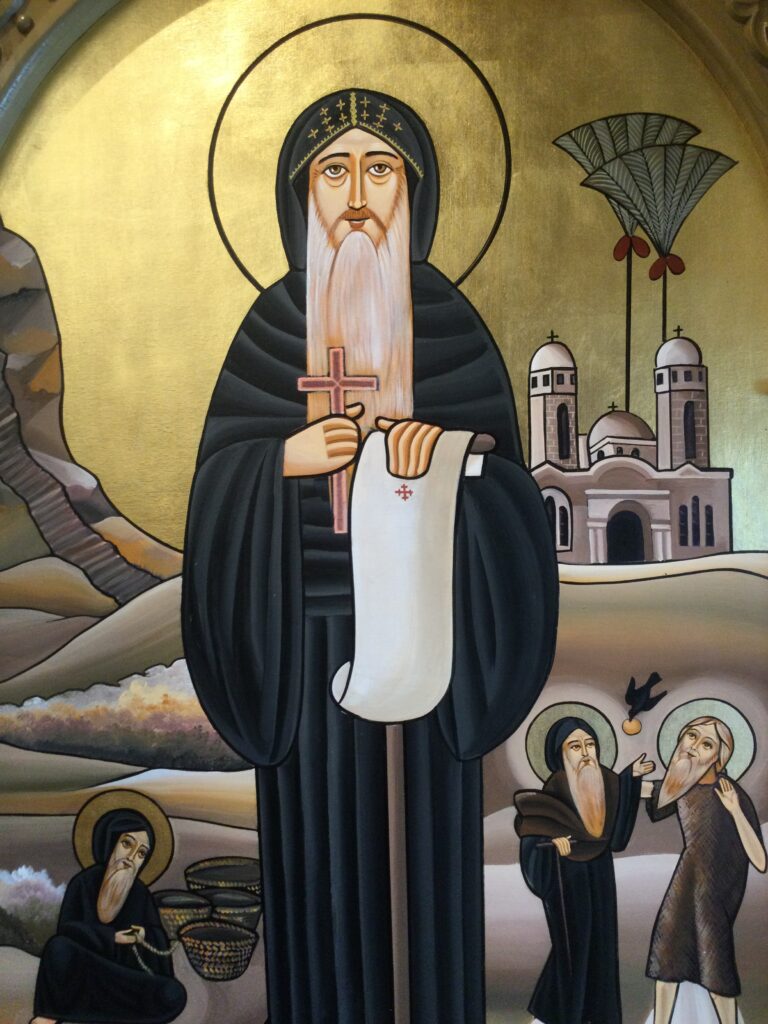
St. Moses the Black, also known as St. Moses the Ethiopian or St. Moses the Strong, is a revered figure in the Coptic Orthodox Church. Born in Ethiopia around 330 AD, he initially led a life of crime and violence as the leader of a gang of robbers. However, his life took a transformative turn when he sought refuge with monks in the desert of Scetis, Egypt. Inspired by their piety and dedication, Moses converted to Christianity, was baptized, and joined the monastic community. His journey from a notorious criminal to a devout monk is seen as a powerful testament to the transformative power of faith and repentance12.
In the Coptic tradition, St. Moses is celebrated for his humility, strength, and unwavering commitment to his faith. Despite facing numerous challenges, including racial prejudice, he remained steadfast in his spiritual journey. One notable story from the Coptic Synaxarium highlights his humility: when he was ordained, the archbishop tested him by instructing the priests to insult him based on his skin color. Moses responded with grace and humility, acknowledging his past sins and focusing on his inner transformation. This story, while controversial for its racial undertones, underscores Moses’s profound humility and spiritual strength13.
St. Moses the Black’s legacy continues to inspire many within the Coptic Orthodox Church and beyond. His feast day is celebrated on July 1 (Paona 24 in the Coptic calendar), and he is remembered as a patron of nonviolence and repentance. His life story serves as a reminder that no one is beyond redemption and that true strength lies in humility and faith. Through his example, St. Moses encourages believers to seek spiritual growth and transformation, regardless of their past12.